European Rider Dispatch, Part 1: London's Strange Honeymoon Between EVs and the City
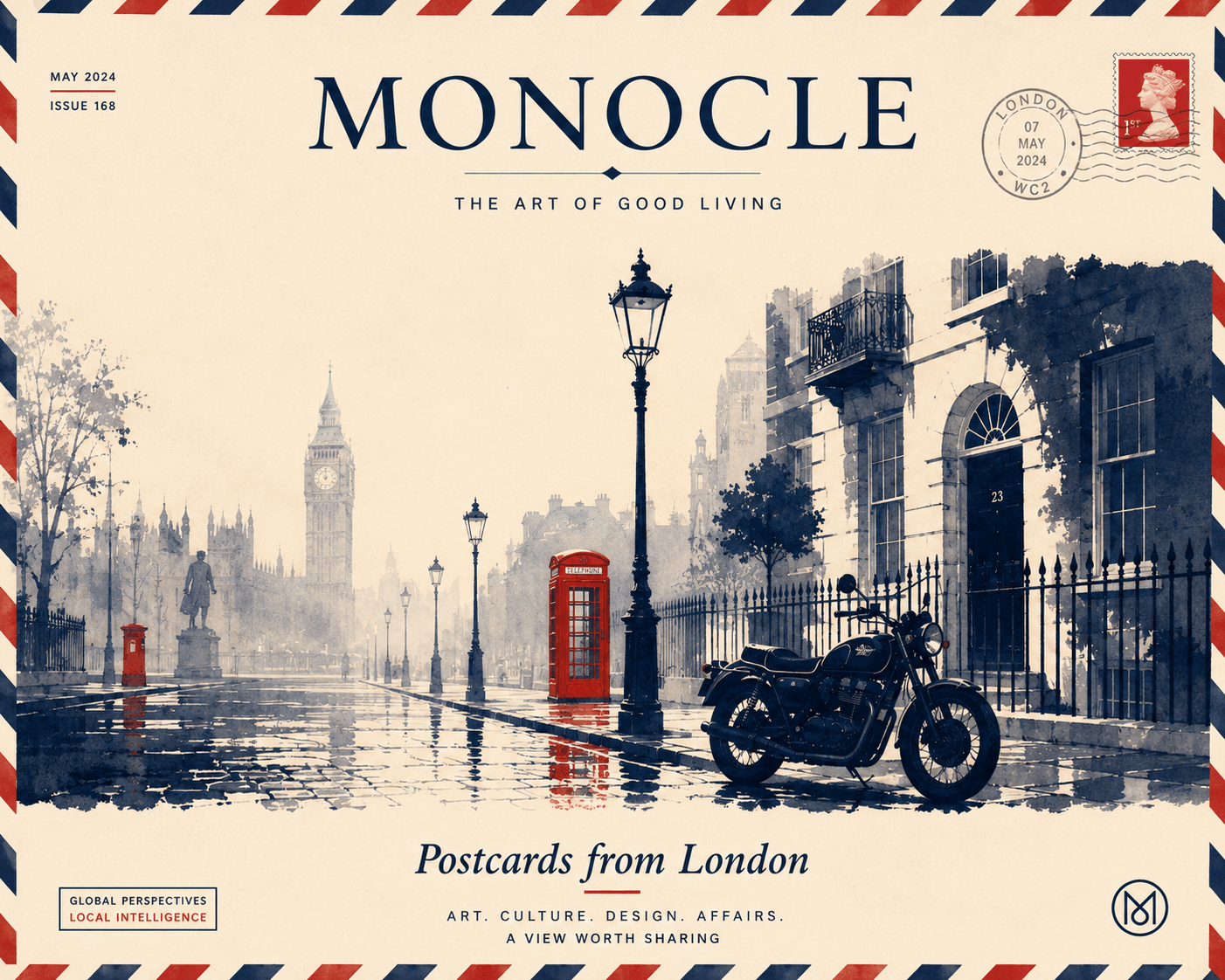
In a London where the ULEZ keeps expanding, a strange honeymoon between EVs and the city has begun. In this inaugural dispatch, a writer based in Europe for 28 years reports from the front lines where motorcycle culture meets environmental regulation.
KEY TAKEAWAYS
- London’s ULEZ expanded to every borough in 2023 and charges non-compliant motorcycles £12.50 per day.
- Urban emissions rules affect not only air quality but the cost of keeping older bikes, commuting choices, and local motorcycle culture.
Ever since I moved to London at 32, riding has taught me just how diverse Europe is as a place. The first few years were a constant string of surprises. In Japan, motorcycling tends to be a self-contained personal hobby, but in Europe I kept running into situations where bikes sat right at the center of social issues. Emission regulations, urban traffic policy, environmental taxes, subsidy schemes — these topics come up naturally in riders' conversations down at the pub. Here, a motorcycle isn't just a vehicle. It's a political tool, a cultural symbol, and a flashpoint in the environmental debate, all at once. That complexity is hard to grasp from Japan, but living in London, I felt it almost every day. As I launch this series, 'European Rider Dispatch,' the first thing I want to talk about is what's happening in London right now. Reporting from the front lines of this strange honeymoon between EVs and the city is the purpose of this inaugural issue.
The motorcycle scene in this city has been fascinating ever since I first lived here. The Ultra Low Emission Zone, or ULEZ, has expanded in stages since 2019 and now covers almost the entire city of London. Petrol bikes that don't meet the emissions standard get hit with a daily charge, and it's landing squarely on riders' wallets. Yet oddly enough, riders aren't simply switching over to EVs. Even as environmental regulation tightens at a rapid pace across Europe, attachment to what riders consider the 'essence' of a motorcycle remains strong, and a great many riders find themselves asking whether a quiet, vibration-free EV can even be called a motorcycle. There's a strong tendency in Europe to demand a 'sensory experience' from a bike. The pulse of the engine, the exhaust note, the feel of shifting gears — these carry a value that exists on a different plane from raw performance. I don't think the frustration over the absence of that 'ritual experience' should be dismissed as mere sentimentality.
European manufacturers are taking this challenge seriously too. Behind the attention drawn by Triumph's TE-1 project as a 'British-built EV motorcycle' was research into an artificial sound designed to mimic an engine's note. That's evidence of European manufacturers seriously exploring how to substitute for that sensory experience. BMW and KTM, too, are clearly grappling — as developer interviews on the ground make evident — with how to carry a bike's 'character' into the electric era alongside their EV model development. Looked at from the city's side, though, the picture changes. Old cities like London have narrow streets and heavy on-street parking. Weaving through on a small electric bike fits the physical structure of the city extremely well. In fact, the shift to electric scooters among delivery workers has advanced dramatically over the past few years. For them, a motorcycle is a 'tool for the job' rather than a 'sensory experience,' so their resistance to switching is far lower than it is among hobbyist riders. In Europe right now, entirely different cultural contexts coexist under the same word: 'rider.'
I don't think Japanese riders can consider this situation unrelated to them. The time it takes for European regulations to ripple through to the Japanese market keeps shrinking year by year. Given that many Japanese manufacturers set their development direction by anticipating Europe's emissions rules and urban policies, what's happening in London or Paris is hardly someone else's problem for a rider in Tokyo. In Europe right now, the very definition of what a motorcycle is stands unsettled. In a sense, I think this is an extraordinarily rich era of change. I'm witnessing, firsthand, the moment when something old breaks down and something new is born.
In 'European Rider Dispatch,' I'll report on policy, manufacturer moves, and riders' own voices — staying as close to the ground as I can. Drawing on the connections I built while living in London and a reporting network that spans Europe, I want to bring readers the kind of on-the-ground reality that rarely makes it to Japan. Europe isn't a single country. Britain, Germany, France, Italy — each has its own motorcycle culture, its own regulations, its own riders. That diversity is exactly what makes Europe such a fascinating field to cover. I promise to capture a slice of what's happening somewhere in Europe, right now, in every installment. I want to convey the richness and complexity of this place to readers as honestly as I possibly can.
European motorcycle culture may look chaotic right now, but I actually feel it's living through an extraordinarily energetic era. That's because the collision between EV technology and the sensory values at the heart of motorcycle culture — that tension — is, in the end, sharpening the question of what a motorcycle actually is. Conflict is also a source of creation. I've watched that cycle repeat again and again since my time in London. Every time environmental regulation tightens, riders try to put their culture into words. That process has been enriching Europe's motorcycle scene. I'm looking forward to reporting regularly from the ground. The next installment will look at the state of lane-splitting legislation in Germany and how the rider community there is responding.
Sources and references
Public information cited or consulted while preparing this original feature.