Is an EV Worth Buying? Episode 1: The Reality of Choosing an Electric Motorcycle in 2026 — A Data-Driven Buying Guide
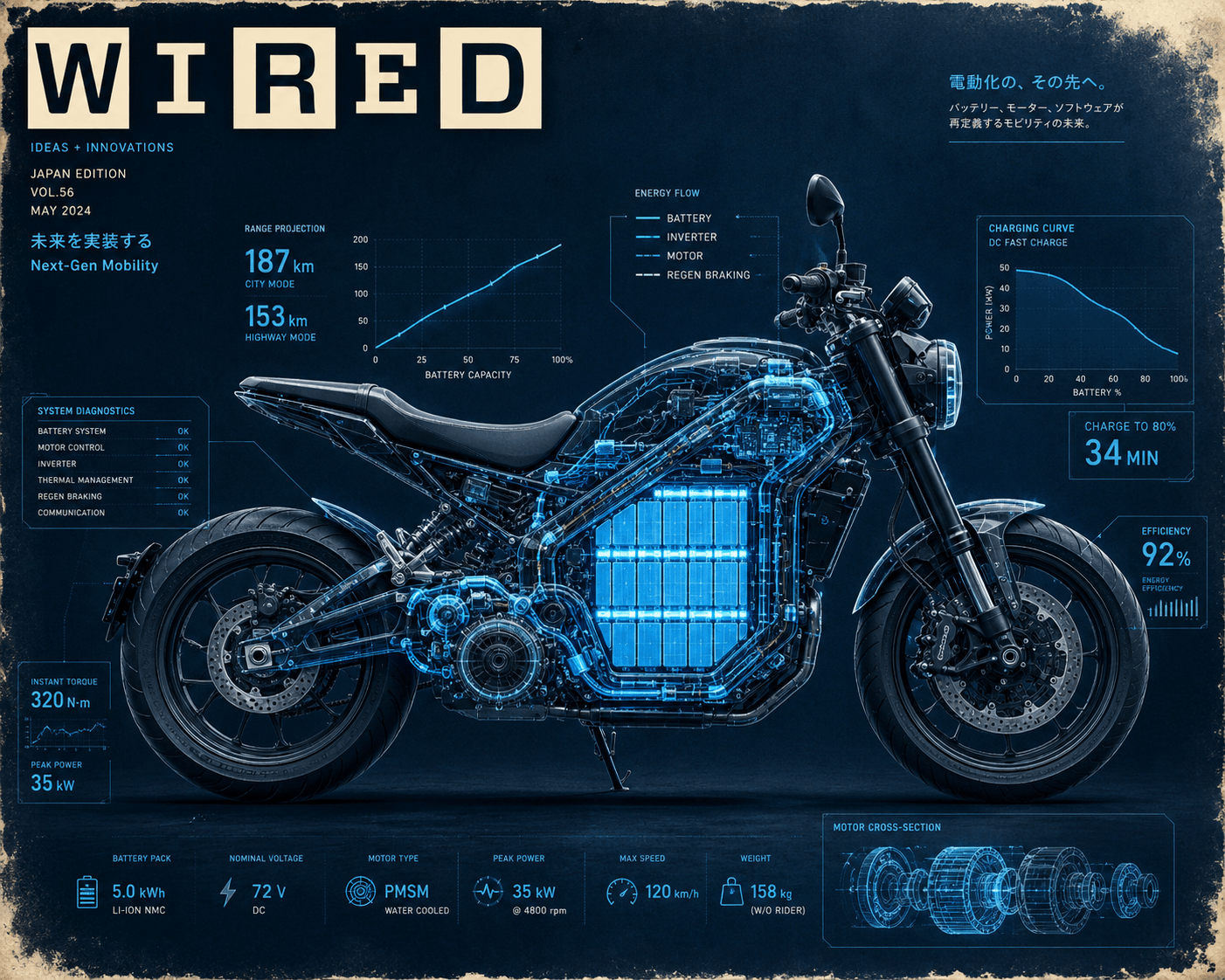
The reality of buying an electric motorcycle in 2026, told through data. In this inaugural installment, a former powertrain developer lays out range, battery degradation, and total cost of ownership without emotion, purely on the numbers.
KEY TAKEAWAYS
- Compare electric motorcycles on usable range, charging access, riding frequency, insurance, and maintenance—not purchase price alone.
- Daily short trips with home charging are a strong fit, while long-distance use depends heavily on charging time and regional infrastructure.
I studied electrical engineering, worked in powertrain development, and eventually started riding electric motorcycles. It began with the job itself — some of my work required me to ride test vehicles myself to evaluate them, and that opened the door to electric bikes. Once I started riding, I realized how many misconceptions were out there. 'They don't have any power,' 'the battery dies fast,' 'charging is a hassle' — much of this, I felt, was either outdated impressions or simply exaggerated. Feeling that there were far too many misconceptions about electric motorcycles, I began writing articles backed by technical evidence. I named this series 'Is an EV Worth Buying?' with the hope that readers would arrive at their own answer. I see my role not as pushing a conclusion, but as organizing the data readers need to make that judgment.
Let's start by laying out the current state of things. As of 2026, electric motorcycles on the domestic market range from small models equivalent to 50cc up to mid-size models equivalent to 400cc, in displacement terms. Looking at the data, small 50cc-equivalent models for delivery and commuting still account for the largest share of unit sales. The mid- and large-size classes, which appeal more to enthusiasts, are smaller in volume but show a higher year-on-year growth rate. The market is clearly expanding, but I think we need to look carefully at where that expansion is actually heading. What matters is that 'the number of EV bikes is increasing' and 'EV bikes have become a viable choice' are two different questions. A rise in unit numbers doesn't in itself guarantee that these bikes fit real-world usage conditions.
When considering a purchase, there are three key metrics that should be judged by numbers, not emotion. The first is the match between range and charging infrastructure. Most current mid-size EV motorcycles offer a WLTC-mode range of around 80 to 150km. Technically speaking, that's plenty for daily use within a city. But once you factor in long-distance touring, whether the bike supports fast charging and how charging spots are distributed become decisive. At present, fast-charging spots that support electric motorcycles are far scarcer than those for four-wheeled EVs. That's a reality you can't ignore when deciding whether to buy. The second metric is battery degradation and residual value. Lithium-ion batteries lose capacity depending on charge cycles and temperature exposure. Looking at the data, remaining battery capacity after five years and 50,000km of use varies significantly by product, often falling somewhere in the 70-90% range. How this affects a bike's resale value needs to be evaluated on different terms than the wear of a gasoline engine. The third metric is TCO (total cost of ownership). Electricity costs — the equivalent of fuel costs — are far lower than gasoline. But battery replacement cost remains a future risk. Technically speaking, I'd strongly recommend checking the battery warranty terms. You should choose a model where the warranty period, distance, and remaining-capacity threshold are all clearly specified together.
Let me be clear about where I stand. I want to see EVs succeed, but I believe that requires presenting the data honestly. Both promotional pieces built on the premise that 'EVs are wonderful' and skeptical takes that 'EVs are still too early' get in the way of good judgment. Technically, this is a fast-evolving field, and this year's numbers may well be different next year. That's exactly why I see it as my job to keep answering the question 'Is an EV worth buying?' with the latest data, every single time. Judging by numbers rather than emotion, while still carefully reading the context behind those numbers — that's my style. Next time, I plan to cover measured real-world range data by model along with a charging infrastructure map. Looking at the data, you'll likely find that regional differences are quite significant. Many of these are technically solvable challenges, and I'll work through them one by one.
One note on how to read the data in this series: I'll make a clear practice of distinguishing between 'estimated values' and 'measured values.' Catalog figures and real-world usage numbers often diverge, and understanding that gap matters when making a purchase decision. To judge by numbers rather than emotion, you first have to be able to assess the reliability of those numbers themselves. Technically, the starting point is understanding the difference between test conditions and actual usage conditions — and I intend to build up that foundational knowledge bit by bit with each installment. As battery technology evolves, I'll keep updating the content of this series accordingly. Looking at the data, in a field where last year's right answer is often outdated this year, I consider it my responsibility to keep delivering the latest information.
Sources and references
Public information cited or consulted while preparing this original feature.