Scooters Only, Launch Issue: I Have a Big-Bike License. I'm Still Riding a Scooter Today
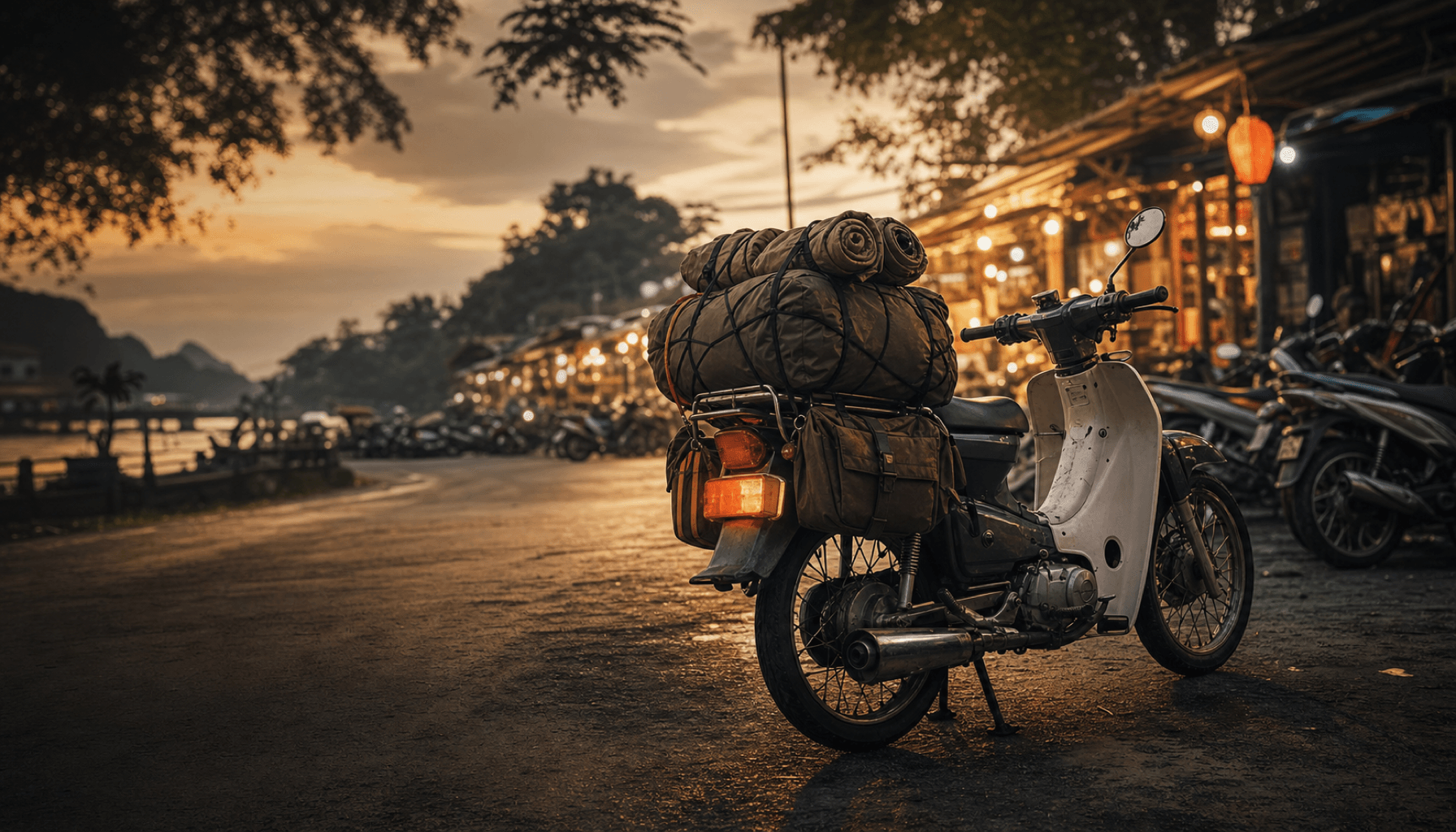
Scooter editor 黄孟紀 launches a new column. Ever since a JOG ZR won him over completely in high school with its 'easy, convenient, fast' combo, every bike he's owned has been a scooter. The launch issue lays out all his reasons.
KEY TAKEAWAYS
- Scooters offer a distinct kind of freedom through storage, low-speed manageability, and continuity between daily mobility and travel.
- Looking at small-capacity camping and everyday Asian mobility together shows scooter practicality functioning as culture in its own right.
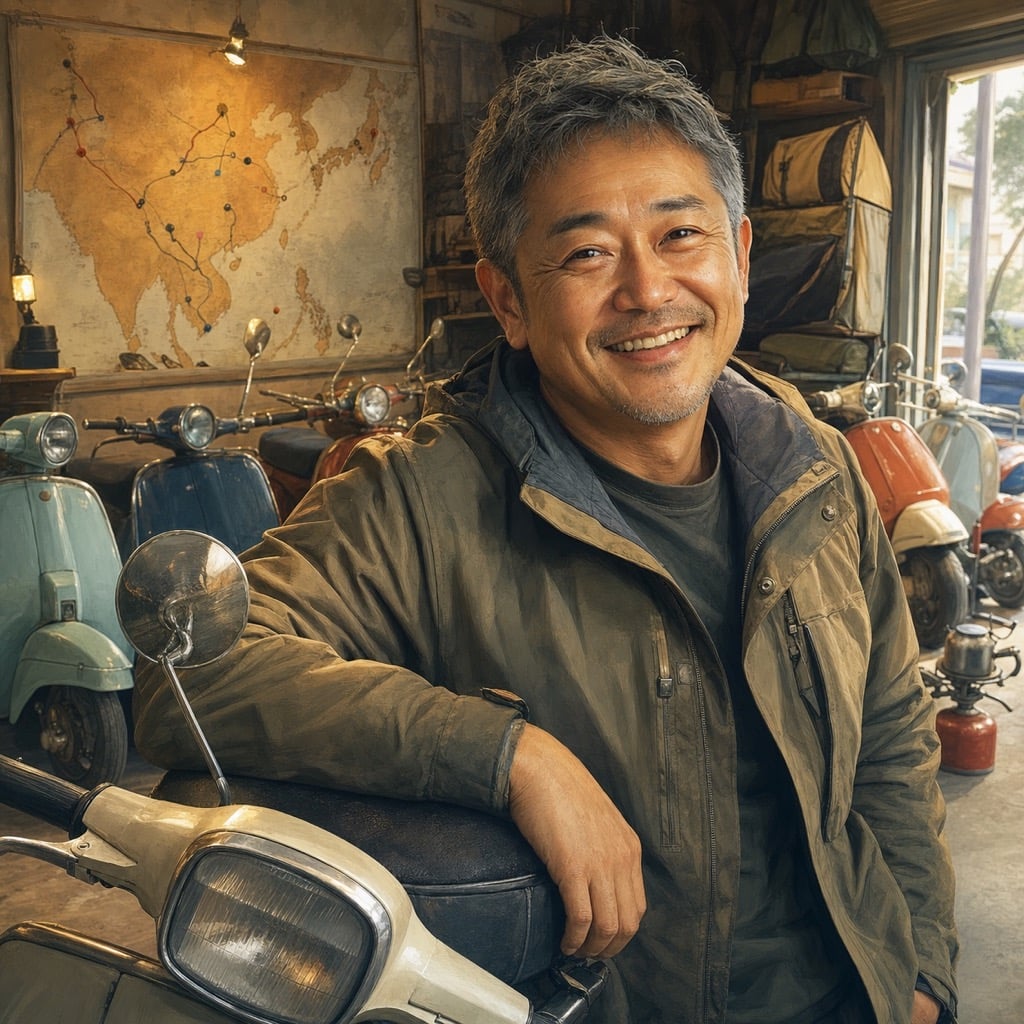
Let me confess something up front: I hold a license for large motorcycles. I've laid a 750 down in riding school, and I think I understand the thrill of a liter bike. And yet, every single bike in my garage is a scooter. It all started in high school with a JOG ZR handed down to me by a senior. I still remember the shock of the first time I twisted that throttle: 'Easy, convenient, fast!' Those three qualities completely won me over, and I've been scooters-only for decades since. This column is a place where I get to talk about the appeal of scooters however I please. If you already ride one, I hope you'll nod along thinking 'yeah, exactly.' And if you don't, I hope you'll peek in and think, 'oh, that world exists too.'
There's long been a tendency to look down on scooters as somehow a rung below real motorcycles, and I've never been able to stand that. Just think about it: rain gear, tools, and souvenirs all fit under the seat, you can rest shopping bags on the flat floorboard, and one machine handles commuting, errands, and touring alike. Off the line at a stoplight, it'll beat a poorly-ridden manual bike. And the freedom of tossing your helmet into the under-seat storage and walking into a shop empty-handed — once you've known that, there's no going back. My standard move on long weekends is loading camping gear onto a 125cc scooter and heading out. Covering long distances on small displacement isn't 'slow' — it's the scenery getting richer. Sticking to prefectural roads instead of the main highways, you run into villages and ferry crossings that a big bike would have just blown past. I'm used to the look big-bike riders give me at roadside stations, the 'wait, you rode that here?' face — I actually consider it a badge of honor at this point. And that odd sense of camaraderie when you lock eyes with a fellow scooter rider who's traveled the same road — that's part of what makes the trip.
Turn your eyes to Asia and scooters aren't a supporting character — they're the lead. The mass of scooters lined up at the front of a Taiwanese intersection waiting for the light, Vietnam's morning commute rush, cargo-laden Cubs and scooters threading through the alleys of a Thai market — that's the scenery where the distance between daily life and two wheels is closest anywhere in the world. Every long weekend I go see it for myself, and on the flight home I'm already planning the next trip. And right now, the ground under that scenery is shifting hard with electrification. Honda's fixed-battery electric commuter, the UC3, launched in Thailand and Vietnam, is a symbol of that. Going with a fixed battery instead of a swappable one strikes me as a realistic solution matched to how people actually live — it's well thought out. That said, honestly, I have mixed feelings too. The sound of a small engine waking up first thing in the morning, the memory of two-stroke white smoke, the thrill of a dash off the line — the quiet disappearance of things like that is also a loss traded for convenience. Convenience is a virtue, sure. But culture can't be explained by efficiency alone. So in this column, I won't shy away from talking about electrification, but I also won't hide my attachment to what's being left behind.
Restoration is going to be another pillar of this column. Alongside my active scooters, there are always one or two discontinued old models mid-repair in my garage. Hunting for parts for a discontinued scooter is real treasure hunting — trawling overseas auction sites late at night, sending broken-language messages to shops in Taiwan, and that rush when you finally open the box that arrives. It's a world no different from the classic-bike hobby around big motorcycles, and scooters have that same world too, fully intact. If anything, because so many were produced, there's the added fun of unexpected parts turning up from unexpected countries. A commuter workhorse from decades ago can run again if you put in the effort. That's a joy you can't explain through efficiency, and it actually connects back to the electrification conversation too. Fixing up something old and keeping it running is, I think, a perfectly legitimate form of sustainability.
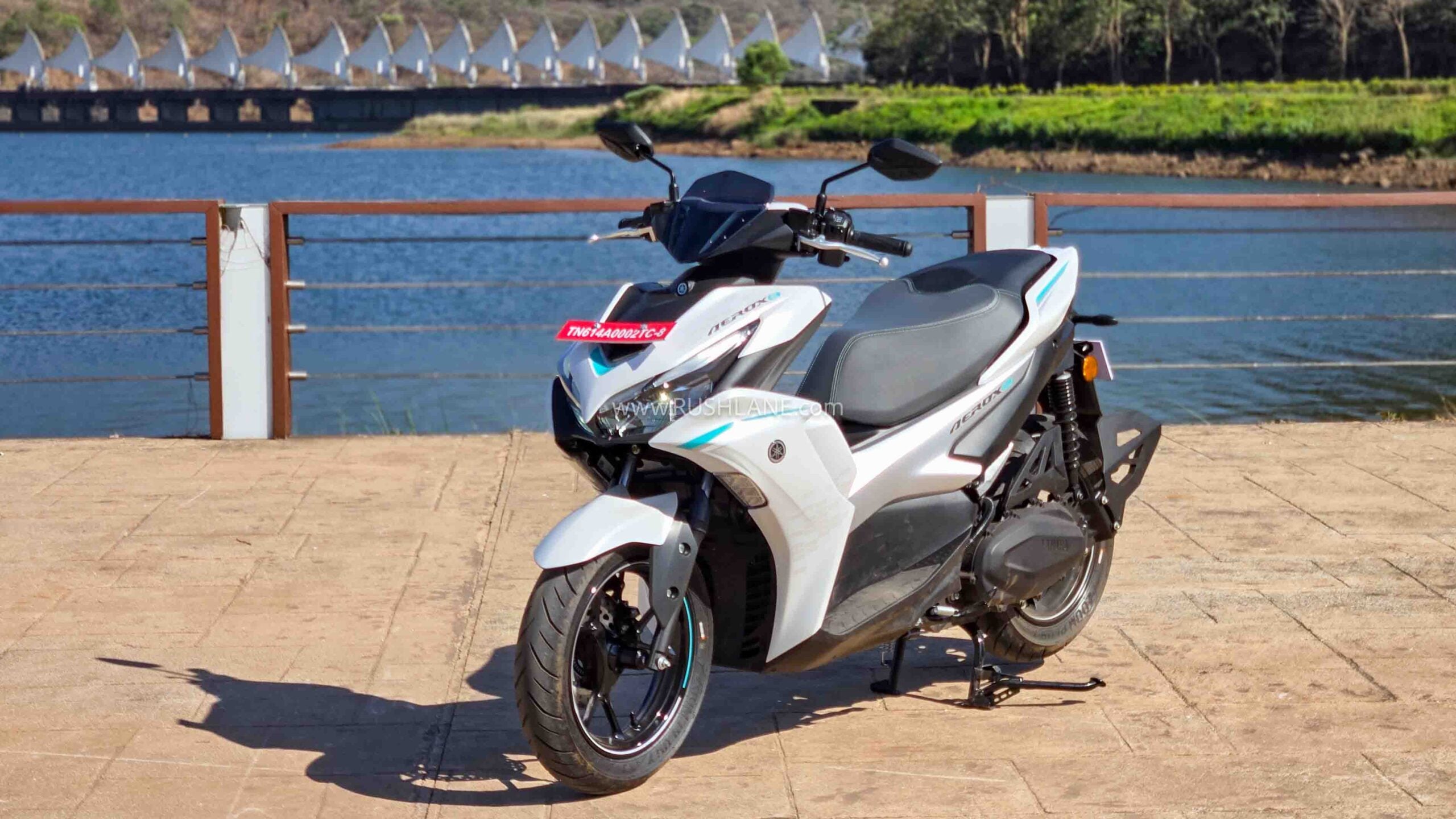
I already know the themes I'll cover: rundowns of new scooters, the state of two-wheelers across Asia, restoring old scooters, and field reports from small-displacement camping tours. I genuinely believe there's nowhere a scooter can't take you. Next time, I plan to start with how I pack for the '125cc camping tour' I run every long weekend — what goes where under the seat and in the rear box. That's a kind of art form in itself. And yes, I'll ride electric scooters too. Whether I end up criticizing or praising them, the only fair way to do it is to ride first and talk later. Gas or electric, new or old — my standard never changes: 'easy, convenient, fast,' and whether it's fun to ride. As long as that's satisfied, I don't care about the drivetrain — or at least that's the idea, though I suspect I'll end up talking about exhaust notes by the end anyway. I hope you'll bear with that stubborn streak too. For now, let's start together by packing gear under the seat.
Sources and references
Public information cited or consulted while preparing this original feature.