Gear Lab #4: The Bladder Is Done After Six — The Numbers Missing From an Airbag's Price Tag
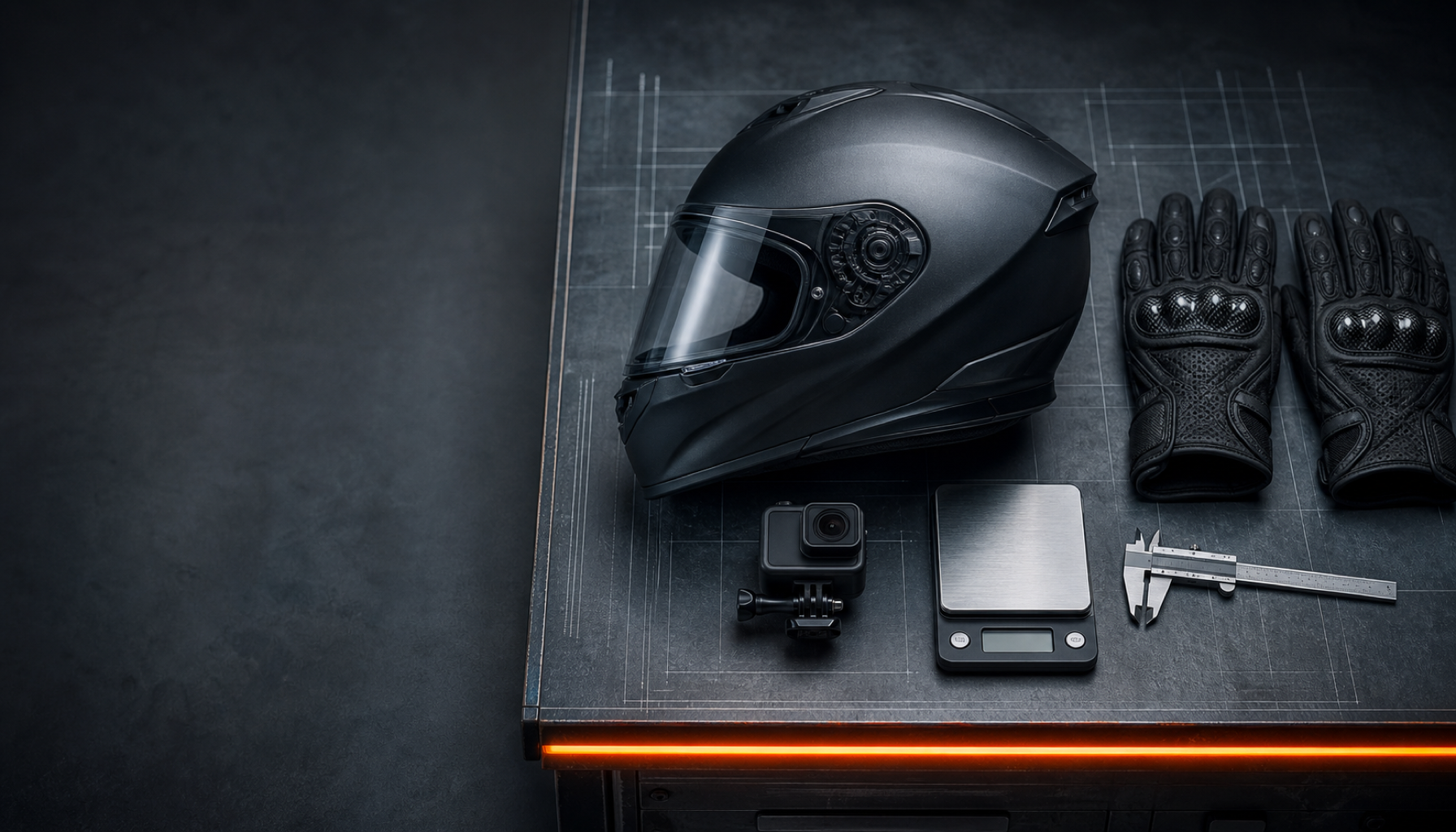
An airbag vest's price tag shows only the vest. The inflator is £89.99, the bladder is rated for six inflations — a look at the numbers that begin after purchase, through the lens of measurement and fit.
KEY TAKEAWAYS
- The Alpinestars Tech-Air 5 Plasma costs £699.99, weighs 1,530g — more than 25% lighter than its predecessor — and inflates in as little as 20 milliseconds via six sensors. Its USB-C battery lasts up to 30 hours of riding.
- The inflator can be replaced at home for £89.99 after deployment, but the bladder is rated for a maximum of six inflations and costs £299.99 to replace — over 40% of the vest's price arriving later as a consumable.
- The Plasma trades slightly narrower coverage than the Tech-Air 7 and 10 for a profile thin enough to wear under a jacket without a back protector. The thinner the vest, the more body shape shifts the fit — so try it on both over a winter base layer and over summer mesh.
- The motorcycle-derived Tech-Air MX ($700 / €600) was worn under jerseys by downhill mountain bike racers at July's La Thuile World Cup, and in March Autoliv showed the T-SABE, developed with RS Taichi, at the Tokyo Motorcycle Show.
Last time I wrote about the CE "AAA" rating and that unusual size-48 label — a column about how to read the numbers printed on a tag. This time I want to do the reverse and talk about the numbers that are not printed anywhere. Airbag vests. Reading Motorcycle News' February piece on the Alpinestars Tech-Air 5 Plasma, the thing I stared at longest was not the spec sheet. Price: £699.99. Weight: 1,530g, more than 25% lighter than its predecessor. Six sensors — tri-axial accelerometers and a tri-axial gyroscope — referencing a crash database built up since 2004, inflating in as little as 20 milliseconds. Battery good for up to 30 hours of riding, charged over USB-C. All of that reads as a solid, expected generational improvement.
What stopped me was what came after. Once the vest fires, you can replace the gas inflator yourself at home for £89.99 — provided the bladder is undamaged. And that bladder is rated for a maximum of six inflations, with replacement costing £299.99. So if it deploys six times, you pay again for parts worth more than 40% of the original price. This is not a flaw. Any device that inflates a bag using a pyrotechnic charge is going to carry consumables, and I actually think stating "six" plainly and letting the owner do the swap is honest design. But the price card in the shop shows only £699.99. I want that framing shared up front: an airbag is gear whose running costs begin the moment you buy it. Put another way, by the sixth deployment you have paid out close to the price of a second vest. Not many people crash six times, of course, and if you got that far the thing has more than earned its keep. Even so, when I think about how many riders would actually ask a shop "and what do the consumables cost?", it feels worth writing down.
The other thing a label cannot tell you is the coverage trade-off. That same article notes that the Plasma got thinner and more flexible so it can be worn under a jacket that has no built-in back protector — and that in exchange, its coverage is slightly narrower than Alpinestars' own Tech-Air 7 and 10. Thin means it follows the body. Following the body means that when the body's shape changes, so does where it sits. That is why I tell people to try one on twice: once over a winter base layer, and once over nothing but a summer mesh. A chest with breasts, a broad-shouldered frame, a thicker midsection — in each case the hem of the same size M settles in a different place. Fit is really all that matters, regardless of any gender label. The coverage diagram in the catalogue will always sit slightly differently on your actual body. One more measured note: 1,530g is genuinely light for a vest, not a number that will make you resent it in midsummer heat. The issue isn't weight, it's thickness and stiffness. Anything carrying an inflatable bladder uses fabric that is firmer than an ordinary protector vest. Raise your arms — does it bind at the shoulder joint? Fold into a riding crouch — does the hem ride up over your stomach? Those are the things to check.
What makes this field interesting right now is that it is spilling outside motorcycling. Bikerumor reported on August 13 that at July's mountain bike Downhill World Cup at La Thuile, riders from Specialized Gravity Racing — including Jordan Williams — plus Santa Cruz Burgtec and Mondraker Factory Racing were racing in the motorcycle-derived Tech-Air MX vest ($700 / €600, covering chest, back and shoulders, with MX Race, Enduro and Rally modes) worn under their jerseys. It has become small enough to hide under a jersey. Downhill mountain biking runs at lower speeds than motorcycling, but the way you go down is remarkably similar — and being deployable in that setting also means the false-trigger threshold has been tightened up considerably. And back in March, Autoliv partnered with RS Taichi to show the T-SABE vest at the Tokyo Motorcycle Show on March 27–29 — the first fully wearable protection system the car-airbag company has developed end to end itself. If volumes rise, unit prices and consumable prices should both come down. My conclusion: an airbag is no longer gear you agonize over buying. It is gear where you first work out whether you can sustain it, six inflations included. And then you put it on, raise your arms, get into a riding crouch, and decide from there.
Sources and references
Public information cited or consulted while preparing this original feature.
- Motorcycle News: Under the skin of the Alpinestars Tech-Air 5 Plasma airbag (Feb 19, 2026)
- Bikerumor: As We Spy Bike Airbag Prototypes, Alpinestars Races World Cup DH in Real Tech-Air MX Vest (Aug 13, 2026)
- Autoliv: Autoliv and RS Taichi Partner to Advance Motorcycle Rider Protection with an Airbag Vest (Mar 24, 2026)