Is an EV Worth It? #4: The Way to Buy One Is Not to Buy the Battery
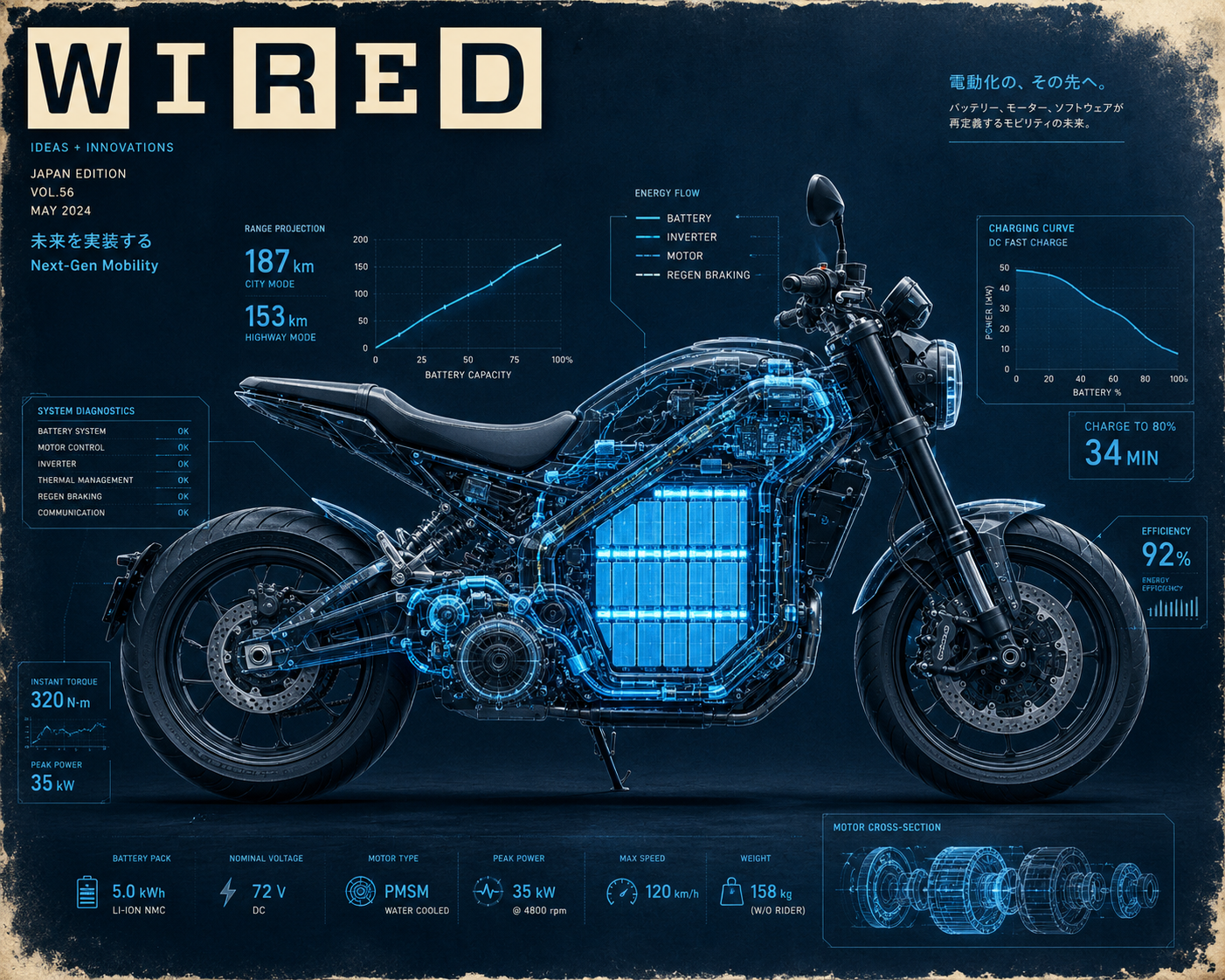
In July, Gachaco took its battery rental nationwide at ¥2,530 a month with no sign-up fee. Hanoi is going from 50 swap stations to 1,000. The price of an electric two-wheeler is starting to hinge not on the machine, but on whether you own the pack.
KEY TAKEAWAYS
- On 5 July 2026 Gachaco took its Basic Plan battery rental nationwide: a Honda Mobile Power Pack e: for ¥2,530 a month including tax, a charger for ¥1,430, and no sign-up fee. Riders in areas with no swap station can now rent just the battery.
- One battery plus one charger costs ¥3,960 a month, roughly ¥240,000 over five years. That is expensive for someone riding a few hundred kilometres a year, but renting can total less for a rider who would otherwise buy two replacement packs in five years. The break-even flips with mileage and years of ownership.
- In Hanoi, the city, LG Energy Solution and Honda will deploy 50 swap stations and around 500 electric motorcycles in Q3 2026, expanding toward 1,000 stations citywide from Q3 2027. Swapping is a business whose viability depends on density.
Last time I wrote about subsidies, and about how a ¥480,000 ceiling has done almost nothing to make electric two-wheelers cheaper. A subsidy moves only the price tag at the moment of purchase. It does not touch the money that leaves your account while you own the machine. This July, something moved on that second front. On 5 July, Gachaco extended its "Basic Plan" battery rental nationwide. A Honda Mobile Power Pack e: costs ¥2,530 a month including tax, and the dedicated charger ¥1,430. There is no sign-up fee, and Gachaco covers shipping at the start of the contract. Until now the service reached only Tokyo, Saitama and Osaka. The change is that you can now rent just the battery even if there is not a single swap station in your prefecture.
Let us look at the numbers rather than the mood. One battery plus one charger comes to ¥3,960 a month, or ¥47,520 a year. That is roughly ¥140,000 over three years and ¥240,000 over five. I think it is too quick to dismiss that as expensive. From a battery standpoint, the pack is both the most expensive part of an electric two-wheeler and the part that most reliably degrades. Buy it and you carry that degradation risk to the end yourself. Rent it and the degradation becomes the lessor's problem. Gachaco launched the Basic Plan alongside a "Refresh Exchange" service that swaps your pack for one at 95% state of health or better for ¥10,000 including tax and shipping — in effect, turning that anxiety into a product. Still, whether owning or renting wins flips easily with annual mileage and years of ownership. Paying ¥3,960 a month makes little sense for someone who rides a few hundred kilometres a year. For a daily rider who would otherwise buy two replacement packs over five years, renting can plausibly come out lower in total. Averages will not answer this; each owner has to run their own figures. One more thing is easy to miss: the charger. To anyone with a socket at home, ¥1,430 a month looks like waste. But if you choose an arrangement where you never visit a swap station, the charger is essential and the battery alone does not complete the picture. In other words, the Basic Plan is designed to use your home in place of a station: what you are buying is not the speed of a swap but the transfer of degradation risk. Confuse the two and the thirty-second exchange you imagined never arrives. On top of that, the contract ends monthly. Unlike buying a pack outright on finance, you can stop in a month you do not ride — a value that does not show up in the arithmetic.
Look abroad and it becomes clear what kind of business swapping actually is. In Hanoi, the city authorities, LG Energy Solution and Honda have signed a memorandum to deploy 50 swap stations and around 500 electric motorcycles in the central Hoan Kiem area in the third quarter of 2026. After that pilot is assessed, the plan is to expand to 1,000 stations across the city from the third quarter of 2027. LG supplies 2170 cylindrical cells and handles safety management and station operations. Behind it sits the low-emission zone inside Ring Road 1, in a city with roughly eight million vehicles. Taiwan's Gogoro, meanwhile, is spending about NT$1 billion (roughly US$32 million) in 2026 to add more than 100 stations and retire its first-generation batteries. Technically speaking, swapping is a density business. Where stations are thin it does not work at any price. Gogoro retiring its first generation at the same time is the flip side of density: the larger the network, the more the worst packs drag down the whole experience. Swapping is also a business where the quality of the worst battery on the network becomes the quality of the service. So Gachaco steering toward "ship a battery to areas with no station" reads to me not as a retreat from density, but as a bridge until density arrives.
My answer this time to "is an EV worth buying" is straightforward. Buy the machine. You do not have to buy the battery. There are three axes for the decision. First, can your household absorb a fixed cost just under ¥4,000 a month? Second, is your annual mileage high enough to justify that fixed cost? Third, is there a swap station in the area you actually ride in, and if not, is mail-order rental enough? Put your own numbers into those three and the answer usually falls out. Put differently, saying "electric is still too early" without doing that arithmetic is just as much a matter of atmosphere as saying "the combustion engine is finished." What is certain is that the numbers give a different answer for every household's parking space. Next time I intend to look at the other party to that fixed cost — the price of the electricity itself, comparing home charging against swapping.
Sources and references
Public information cited or consulted while preparing this original feature.