Asian Two-Wheeler Economics #4: The Quarter Scooters Grew 30.8% — India Is Changing Shape First
In Q1 FY2026-27, Indian scooter sales rose 30.8% against just 14% for motorcycles. GST 2.0 and electrification are hitting at once, and the market's center of gravity is moving.
KEY TAKEAWAYS
- Indian scooter sales in Q1 FY2026-27 (April–June) rose 30.8% year on year to 2.179 million units, far outpacing motorcycles at 14% (3.309 million). Total two-wheelers reached 5.63 million, up 20.3%.
- GST 2.0, effective end-September 2025, cut tax on two-wheelers up to 350cc from 28% to 18% (covering roughly 97% of models), raised it to 40% above 350cc, and left EVs at 5%. Scooter share has climbed from 32% in FY2019 to 37%.
- India logged over 193,000 EV two-wheeler registrations in July 2026. TVS led with 52,538 units and 27.15% share, ahead of Bajaj (43,607, 22.53%) and Ather (28,819, 14.89%), while Ola Electric slipped to 13,170 units and 6.80%.
Last time I wrote about Bajaj exporting more units than it sells at home — India becoming an export base as well as a market. This time I want to look at that same India from the inside, because while everyone was watching the export figures, the shape of what actually sells domestically changed first. According to SIAM data reported by Business Standard on August 10, domestic scooter sales in Q1 of FY2026-27 (April–June 2026) rose 30.8% year on year, from 1.665 million units to 2.179 million. Motorcycles over the same quarter grew a more modest 14%, from 2.903 million to 3.309 million. Total two-wheeler sales came to 5.63 million units, up 20.3%. Both segments are growing. But one is growing more than twice as fast as the other. In market terms, that is not a boom — it is the start of a swap.
What the numbers show is that the price ladder itself was rebuilt. Under GST 2.0, which took effect at the end of September 2025, tax on two-wheelers up to 350cc fell from 28% to 18%. Autocar Professional's analysis notes that this cut covers roughly 97% of the two-wheelers sold in India. Meanwhile, machines above 350cc went the other way, from 28% to 40%, and electric two-wheelers stayed at 5%. In other words, only the commuter-and-daily-life bracket got cheaper, all at once. The effect is visible: the same publication counts sales from October 2025 to February 2026 up 22% at 9.49 million units. Scooter share has climbed from 32% in FY2019 to 37%, while motorcycles have slipped from 64% to 60%. Since the Japanese makers arrived in force in the mid-1980s, India has been a market where motorcycles held about 70% — and that structure is now coming apart. It is worth adding that a cut like this does not just lower the sticker price; it lowers the monthly payment. A high share of Indian two-wheelers are bought on finance, and shaving a few hundred rupees off the monthly instalment widens the pool of people who can buy by a whole tier. In this market, an 18% figure on a price tag converts directly into the breadth of demand.
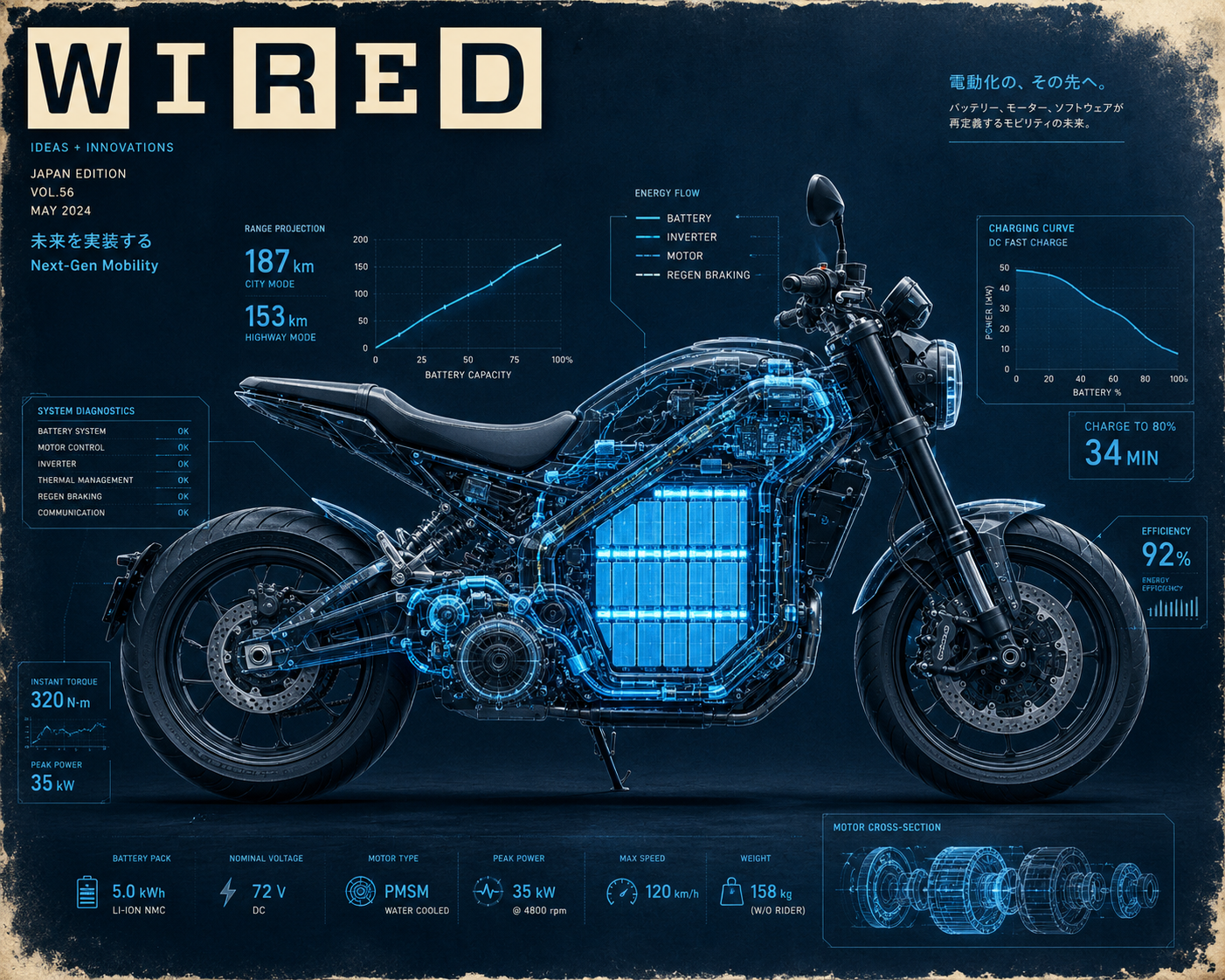
The other force pushing this along is electrification. The above-250-watt e-scooter category nearly doubled, from 207,000 units to 393,000, and exports rose roughly twelvefold. But it is worth noting that even excluding EVs, internal-combustion scooters alone grew 22.4% (from 1.457 million to 1.783 million). Electrification is genuinely pulling the market, but this is not an EV-only phenomenon. Look at a single month and the competition is moving even faster. Entrackr's tally puts July 2026 EV two-wheeler registrations above 193,000 units: TVS led with 52,538 registrations and 27.15% share, followed by Bajaj at 43,607 and 22.53%, Ather at 28,819 and 14.89%, and Hero MotoCorp at 21,174 and 10.94%. Ola Electric, which once led this field, fell to 13,170 units and 6.80%, down 19% month on month. This is not a market where the first mover gets to coast. That twelvefold jump in exports also deserves attention: electric scooters hardened by domestic subsidies and domestic competition are now heading out of the country as they are. In India and Southeast Asia, I would argue that building cheaply and selling cheaply on a sustained basis are two different skills — and both are falling into place at the same time.
Here is my own reading. Seen from Japan, India has long been "the country of cheap small-displacement motorcycles." That picture needs updating. The demand that the tax cut pushed up from below went to scooters, not motorcycles, and inside that segment EVs and combustion models are growing at the same time. Urban commuting distances, more women riding, charging infrastructure — there are several ways to narrate it, but in market terms I think it comes down to one thing: ease of loading and ease of getting on and off now outrank displacement. That is not bad news for the Japanese makers at all, because scooters are precisely the product they have spent decades refining. The catch is who is charging onto that ground with electric machines — TVS, Bajaj, Ather. When I say the center of gravity is shifting, I do not only mean where things get built. I mean where it gets decided what the standard form of a two-wheeler is. In what order will the Japanese makers' local subsidiaries roll out new scooters from here — electric ones included? I read the sequence of those launches over the coming year as the most honest statement of strategy any of them will make.
Sources and references
Public information cited or consulted while preparing this original feature.
- Business Standard: Scooter sales outpace motorcycles as GST cuts, EV boom reshape 2W market (Aug 10, 2026)
- Autocar Professional: Two-Wheeler Sales to Surpass Pre-Covid Level, Will Hit a New High in FY2026
- Entrackr: TVS extends lead in July as Ola Electric, Ather record decline in EV two-wheeler sales (Aug 1, 2026)