New Model Roundup: 2027 KTM 790 DUKE — How the World Reacted to the Return of the 'Scalpel'

Media worldwide have covered the new 790 DUKE since its June announcement. Classifying the tone of 9 independent outlets: 67% positive, 22% neutral, 11% critical. A pie-chart roundup of how the world received the return of the 'Scalpel.'
KEY TAKEAWAYS
- The 2027 KTM 790 DUKE updates its seat, bodywork, chassis equipment, and electronics to combine everyday usability with sharp control.
- Nine independent outlets were broadly positive, but differed on whether the changes amount to a revolution or a measured evolution.
Starting a new feature: 'New Model Roundup.' Whenever a notable new model is announced, this series gathers articles written about it from media around the world, classifies the tone, and boils the whole picture down into a single chart. Coverage of a new model floods in right after the announcement, but just chasing fragments makes it hard to see 'so how is the world actually rating this?' Making that visible at a glance is this feature's job. Round one covers KTM's new '790 DUKE,' which hasn't stopped making news since its June announcement. Our database has 17 related articles in total, 8 of them KTM's own official communications and 9 independent media reports and ride reviews. The chart uses only the latter 9 outlets — official self-promotion isn't counted toward the assessment.
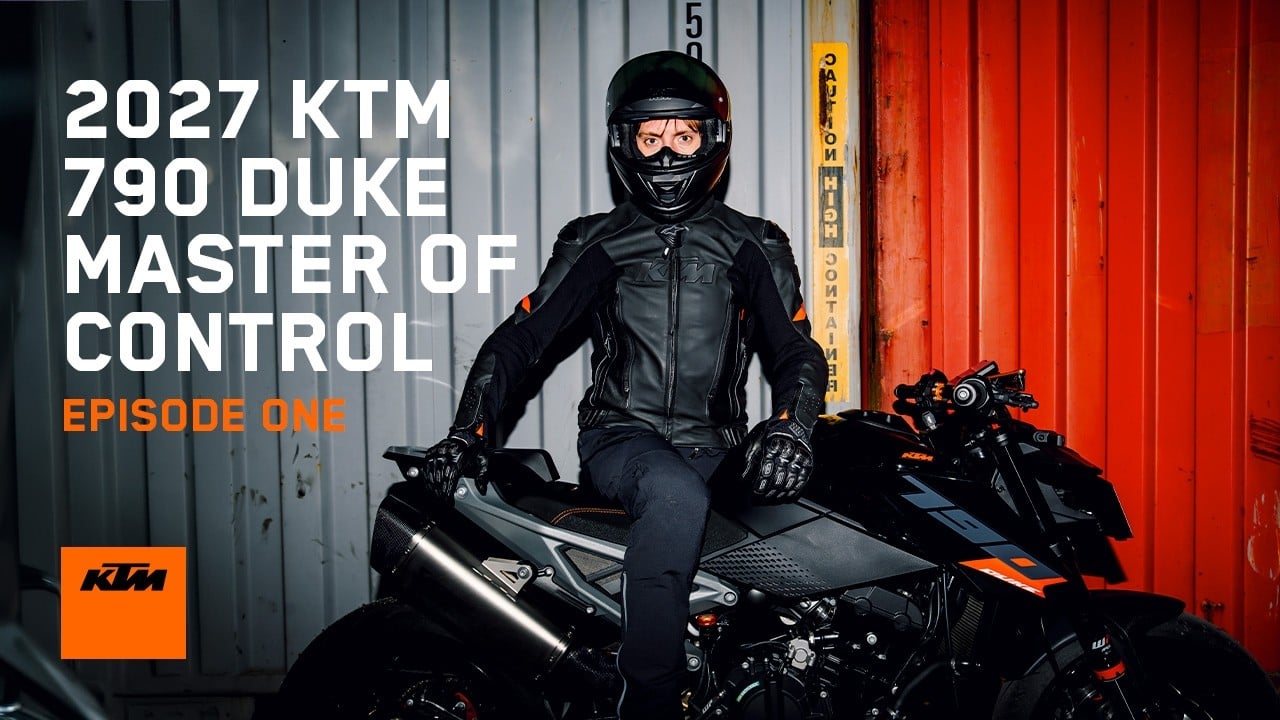
First, the facts. The 2027 790 DUKE marks the return of the '790' name since it was replaced by the 890 DUKE back in 2021. The engine is a 799cc liquid-cooled parallel-twin LC8c. Power was reported as 95PS in the official announcement footage, while subsequent press reports cite 105bhp for the standard spec and 93bhp for the A2-license-compliant version — likely reflecting the gap between the full-power international launch spec and regional versions, but either way, sharp numbers for a middleweight. Equipment includes a 5-inch TFT display and an adjustable WP APEX fork, and notably, in-house brakes from group-owned brand WP — a symbol of vertical integration extending WP's suspension expertise into brakes. Pricing starts at $9,799 in the US, with Japan's launch price set at ¥1,198,000. Nicknamed the 'Scalpel,' the original's sharpness is what this all-new body and chassis are here to reclaim.
So how did the world receive it? As the chart shows, the breakdown across 9 independent outlets is 6 positive, 2 neutral, 1 critical — roughly 67% clearly positive. The most enthusiastic was France's Le Repaire des Motards, whose ride review went as far as calling it a 'revolution' — the argument being that the styling, chassis, subframe, and brakes are all newly designed, at a competitive price to boot. US-based Rider Magazine welcomed it with 'the Scalpel returns with an all-new chassis and electronics,' and Motorcycle.com reported 'a warm welcome for the return of a staple.' New Atlas rated the scale of the change as 'the biggest overhaul in roughly a decade.' On the Japanese side, Autoby magazine was also positive, calling it 'a full redesign built on rider-first thinking.' On the other hand, the one critical vote came from RideApart, which pointed to a lack of ambition, noting 'the scope of the update isn't that large.' The two neutral votes came from Mo-Sai, which simply reported the fact of the Japanese launch, and The BRAKE Report, which covered the in-house brake development as a technical news item.
I also want to touch on regional differences. This round's 9 outlets break down as 5 European, 2 North American, and 2 Japanese. Europe, KTM's home turf, leads in both volume and enthusiasm, and that's also where the 'revolution' verdict came from. North America welcomes the bike while staying cool-headed enough to question 'the scope of the update,' so positive and critical opinions coexist there. Japan's launch announcement came just days after the original reveal, and the ¥1,198,000 price seems to be landing as 'reasonable given the equipment.' Even for the same single model, the angle of view differs this much by market. Including the sequencing of KTM going for the win first in Europe, the middleweight naked bike's main battleground, the regional temperature differences are worth continuing to track.
Let me close with my own take. That 67% positive rate is, frankly, strong. Middleweight nakeds are a fiercely contested class where a new model often gets filed away as 'solid, but no surprises.' Drawing out the word 'revolution,' with criticism staying limited to 'the scope of the update' rather than 'nothing's really changed,' is evidence that KTM's aim largely landed. That said, I want you to notice the temperature difference beneath the numbers too. Most of the 6 positive votes lean toward 'celebrating the comeback,' and there are still few claims that it dominates on absolute performance. The real contest starts this autumn, once test bikes reach markets worldwide and head-to-head comparisons roll in. How the tone shifts then — this feature can keep following the same model. A world verdict is more interesting when you don't stop at one chart, but follow it all the way through to how it changes.
Sources and references
Public information cited or consulted while preparing this original feature.

![[Video] MV Agusta Unveils the Brutale 1000 ABT, a Special Model Collaboration With ABT](/_next/image?url=https%3A%2F%2Febcyllahemayvlukmyyw.supabase.co%2Fstorage%2Fv1%2Fobject%2Fpublic%2Farticle-images%2F1121d65b-0a25-4d21-9077-46c76a5ab102.jpg&w=3840&q=85)