New Model Roundup: Kawasaki KX327/KX327X — The World Reacts to the First Big-Bore Two-Stroke in 20 Years
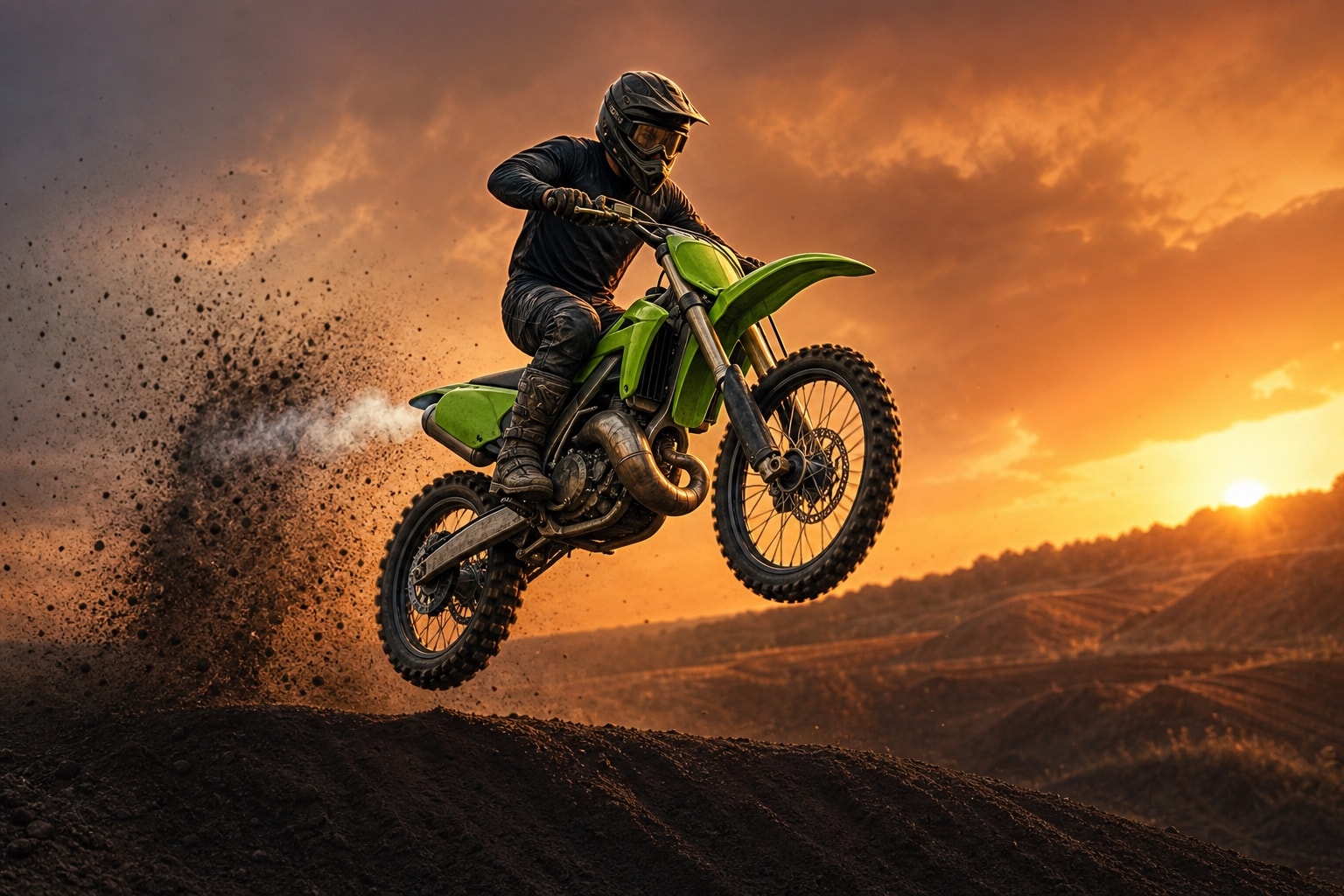
Kawasaki's first fuel-injected two-stroke, the KX327/KX327X. Classifying the tone of 14 total sources from global media and communities: 57% positive, 43% neutral, zero clearly negative. A pie-chart roundup of this frontal assault on a market long dominated by European brands.
KEY TAKEAWAYS
- The KX327 enters the big-bore two-stroke market with a new 327cc fuel-injected engine and a US MSRP of $9,099.
- Across 14 sources, enthusiasm centres on price and novelty, while doubts remain about class eligibility and real-world race performance.
Round two of New Model Roundup lands right in the middle of my home turf. Kawasaki's 'KX327' and its cross-country sibling, the 'KX327X.' It's the first all-new, big-bore two-stroke from a Japanese manufacturer in over 20 years — and Kawasaki's first-ever fuel-injected two-stroke on top of that. This time, on top of the two pieces already in our database, I read through and classified North American and Japanese media coverage plus rider forum reactions — 14 sources in total. The results are in the chart: 8 positive, 6 neutral, zero clearly negative sources. Let's go through this in order, including what that 'zero negative' actually means.
Let's start with the facts. At its heart is a newly developed 327cc fuel-injected single-cylinder two-stroke. A newly designed exhaust valve device optimizes torque and response across the range, and it comes with a counterbalancer and electric start. The frame is aluminum, engineered around the lightness of a two-stroke, keeping curb weight to 233.7 lbs, about 106kg. The motocross-spec KX327 runs a 19-inch rear wheel, while the cross-country-spec KX327X runs 21-inch front / 18-inch rear. North American pricing is $9,099 for the KX327 and $9,699 for the KX327X, with deliveries starting in the second half of 2026. Japan has confirmed the KX327X will launch there, priced at ¥1,089,000, going on sale this winter. For a long time, full-size two-stroke racers were the exclusive domain of European brands — KTM, Husqvarna, GasGas, Beta. A Japanese manufacturer charging in with a completely new design is a big deal in itself.
The global reaction is, frankly, a celebration. RideApart's headline read 'Kawasaki Actually Did It.' Rider Magazine loudly declared 'Big-Bore 2-Strokes Are Back,' and Motocross Action Magazine went over the new model inch by inch in its first look. On the Japanese side, BikeJIN said it 'will change cross-country riding,' and Off1.jp called it a 'redefinition of the off-road world' — both running hot. And what I found most interesting this time was the mood on the forums. A Vital MX thread lit up with riders checking off their long-held wish list, and a thread even appeared on KTMTalk — a gathering place for KTM riders — titled 'Anyone switching to the new KX327?' What's driving it is the price. Against the fuel-injected KTM 300 XC's $11,849, the KX327X comes in at $9,699 — about $2,000 cheaper, and with GPS included as standard on top of that. A comment reading 'it leapfrogged KTM on equipment' probably sums up how this announcement is landing better than anything else.
So is there no skepticism at all? At the media level, there was zero clear negativity. But within the community, there are genuinely cautious voices too. One is the worry that 'this might be more power than I can handle' — a 327cc two-stroke is a rowdier package than the numbers alone suggest. The other is a practical point about class eligibility in amateur motocross. This displacement gets classed as a 450 in AMA competition, narrowing which classes it can enter — there's no option to line up alongside 250F machines. And on the X variant, there were comments noting that 'the details of how mapping and suspension differ from the standard bike aren't clear yet.' The temperature captured in RevZilla's roundup of rider reactions is worth reading as the honest sentiment behind the otherwise celebratory headlines.
Here's my read to close it out. A distribution of 57% positive and zero negative means more than just 'well received.' Bottom line, this was an announcement where nobody loses. For two-stroke riders, it's the option they've been waiting for; for KTM owners, it's leverage at the negotiating table; for the industry, it's a trigger for a market reset. Between this and Ducati's Desmo250 MX entry, 2026 really does feel like a turning point on the dirt. That said, these numbers are still just 'reaction to the announcement,' not 'verdict after riding it.' Real-world testing and head-to-head comparisons won't come in until after deliveries start late this year. Whether this excitement turns out to be real will be decided when it's lined up directly against the KTM 300. When that happens, I'll recount the sources and show you the next chapter of this chart. As for me? Honestly, my finger's already hovering over the reserve button.
Sources and references
Public information cited or consulted while preparing this original feature.