Motorcycles on Screen, Inaugural Issue: I Loved Motorcycles Before I Knew Them
Pop-culture editor Toshio Araki launches a new column. From the night at sixteen when he made a vow while reading Aitsu to Lullaby, to the day he rode the Tomei Expressway on a first-generation NINJA — a manifesto for reading the motorcycles on screen.
KEY TAKEAWAYS
- In manga, film, and music video, motorcycles become cultural symbols that communicate freedom, rebellion, and speed at a glance.
- Moving between on-screen model choices and real-world popularity makes it possible to examine fiction’s influence on motorcycle culture.
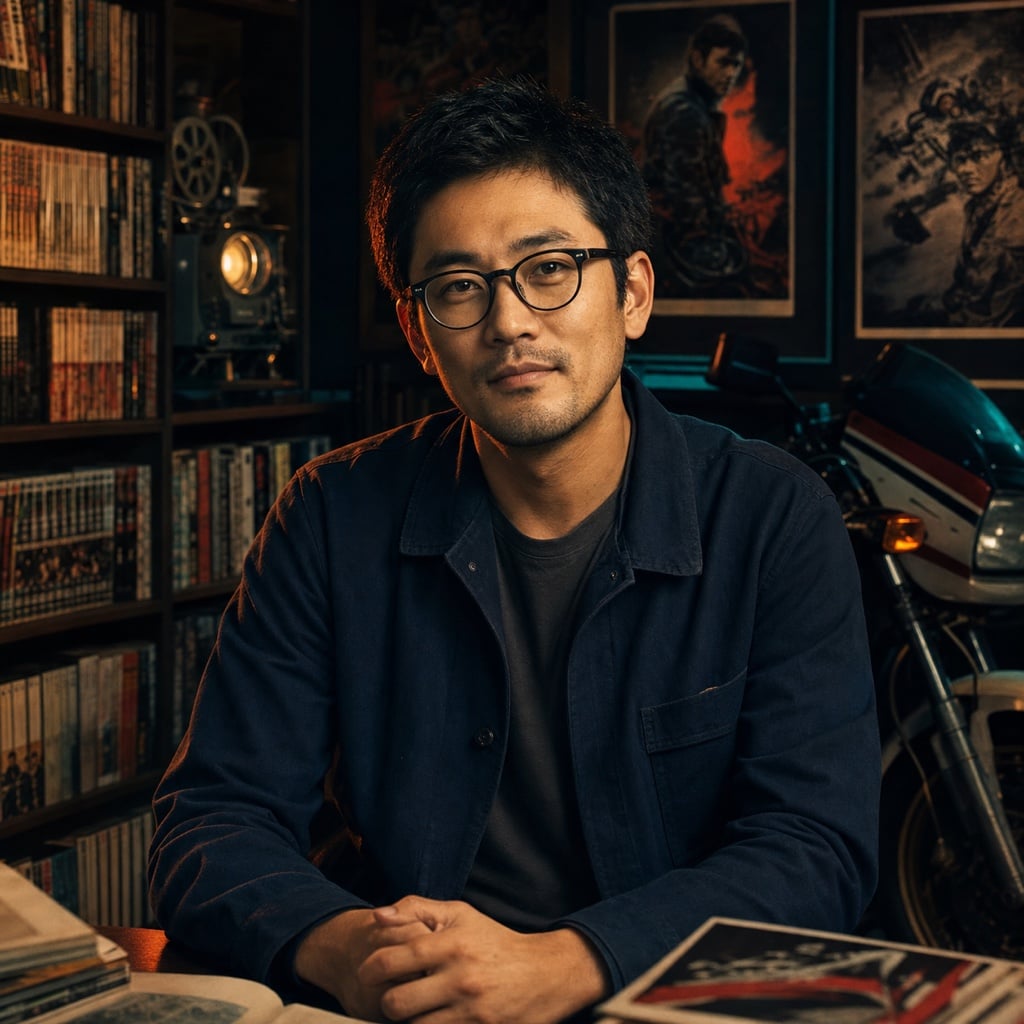
It was a night in my second year of high school. I pulled a copy of Aitsu to Lullaby off my father's bookshelf on a whim and read it straight through until morning, unable to stop turning the pages. That night, a sixteen-year-old with no license — who had never even touched a motorcycle — vowed, "Someday, I'll ride." I loved motorcycles before I knew them. This column, "Motorcycles on Screen," is a place for that kind of story: how motorcycles have been portrayed in manga, film, and music videos, and how they've carried the mood of their era on their backs. I want to read that meaning within the full context of each work. Rather than a movie-recommendation corner in a motorcycle magazine, this is film criticism looking at motorcycles — that's the stance this column will take.
A motorcycle in a work of fiction isn't just a prop. It's a symbol carrying the spirit of its time. The chopper in Easy Rider carried, in a single machine, both the freedom of 1960s America and the collapse of that freedom when it was shot down. Kaneda's bike in AKIRA is a fictional machine that has never existed in reality, yet nearly forty years later, builders around the world are still building real-life versions of it. I consider it the strongest product design 20th-century pop culture ever produced — compressing the anxiety of a dystopian near-future city and a teenager's sense of omnipotence into a single machine. And then there's Top Gun, from 1986. The bike Maverick raced alongside a fighter jet on the runway apron was a Kawasaki GPz900R — the first-generation NINJA. That few-seconds shot burned the 1980s aesthetic of speed — "fastest on the street" — into the world's imagination and changed the fate of a single motorcycle. On screen, a motorcycle is always made to carry more than its actual performance. Freedom, rebellion, speed, solitude — reading what's inside that cargo is the work of criticism. The cargo changes with each era, but one thing stays the same across every country and generation: a motorcycle as the symbol of "a youth faster than walking."
As for myself: after ten years writing film criticism, I finally got my large-motorcycle license at thirty-one. I chose a 1985 GPz900R. The first day I rode the Tomei Expressway, both Maverick and Kaneda were inside me at once. In the context of the works themselves, you could say I climbed, from the real world, into the screen I had loved on those nights as a teenager. Let me note, as a critic, that this isn't mere nostalgia. The influence these works have had on motorcycle culture remains measurable even today. Used-market prices for models that appeared in famous films move; custom trends respond to a film's release; and manufacturers' new-model promotional videos put more and more effort into "story" every year. The screen and the market are connected by a much thicker pipe than we tend to think.
I also need to talk about Japan. Motorcycle manga has its own lineage: the heat of mountain passes and circuits depicted in the 1980s' Bari Bari Densetsu, and the adult pride portrayed in the 1990s' Kirin. In recent years, works like Baku-on!! and Super Cub — which reposition motorcycles within everyday life — have become the entry point for readers. That motorcycle manga starting from the school commute and fuel economy, rather than speed and rebellion, now finds an audience — this shift itself is a shift in the mood of the times. This isn't about which is superior. The cargo that motorcycles on screen carry gets swapped out era by era, and watching that changeover happen is also this column's job. If you've ever had the experience of not being able to stop turning the pages, you'll understand.
There are three things this column will do. First, read the motorcycles in famous works against the backdrop of their era. Second, pick up the mood of the present moment from the motorcycles appearing in new anime and music videos. Third, confirm the "landing" from screen to real motorcycle culture — following up on what someone who got their license after watching a certain film is actually riding today. Only by chasing it that far does criticism connect with reality. Music videos are also important territory. A motorcycle in an MV speaks to the mood of an era in three minutes — the most compressed form of motorcycle expression there is — and artists, in both Western and Japanese music, have repeatedly chosen motorcycles as the vehicle to carry "freedom" or "parting." Just thinking through why a motorcycle and not a car is enough material for a full piece on its own. The first installment will start where it all began: an essay on Aitsu to Lullaby. The late-night waterfront, that Z, and a sixteen-year-old who couldn't sleep. Motorcycles on screen are always running half a step ahead of reality. Let's go check.
Sources and references
Public information cited or consulted while preparing this original feature.