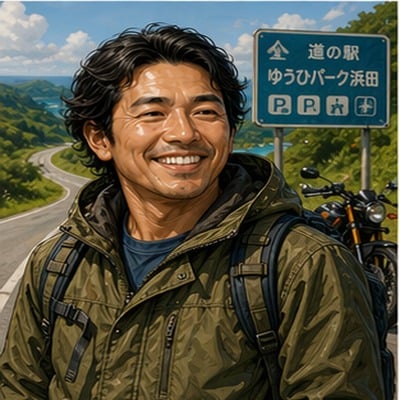
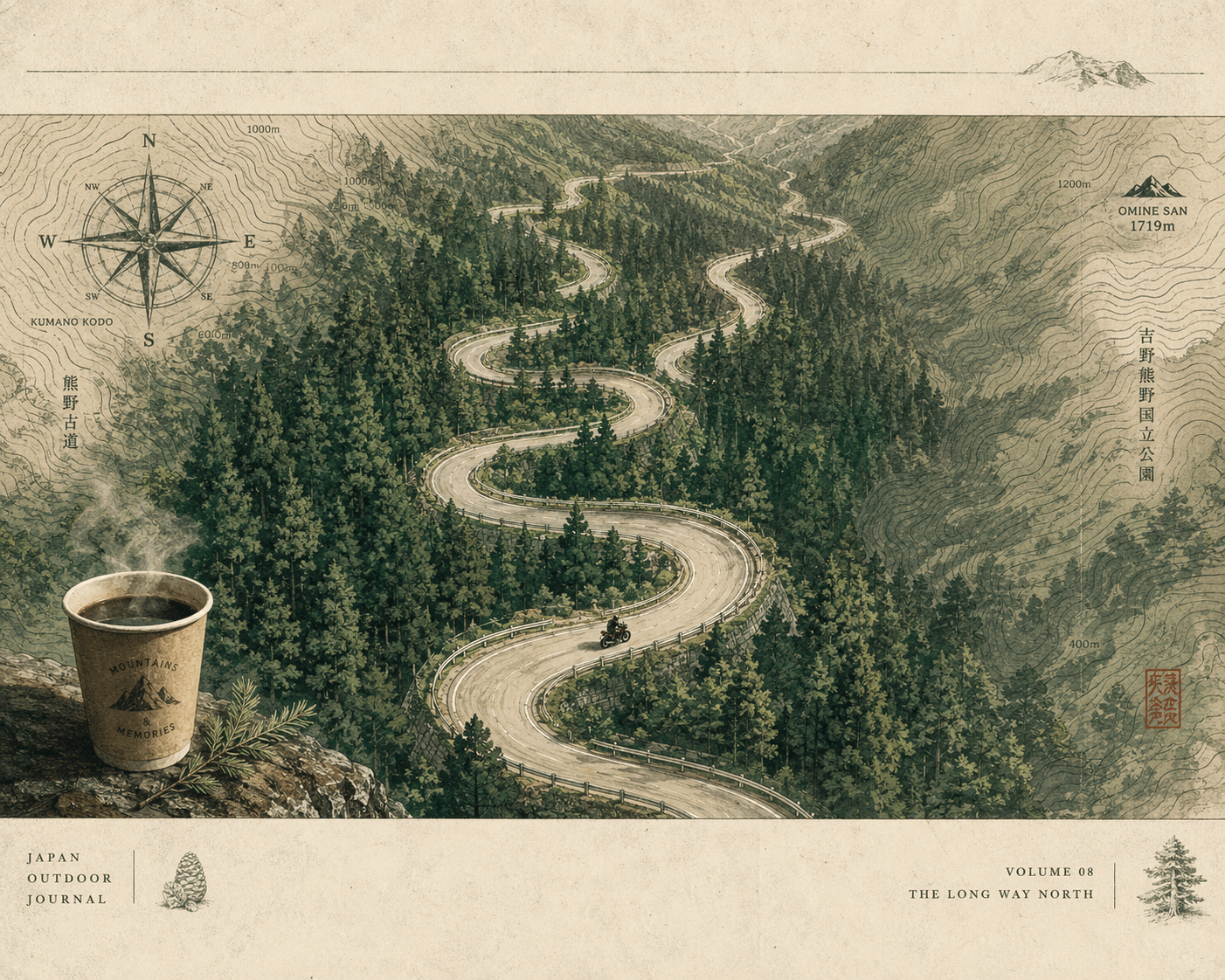
Japan Winding Roads Journal, Part 1: Riding Okuchichibu's Shigasaka Pass — a Prefectural Road You Won't Find on the Map
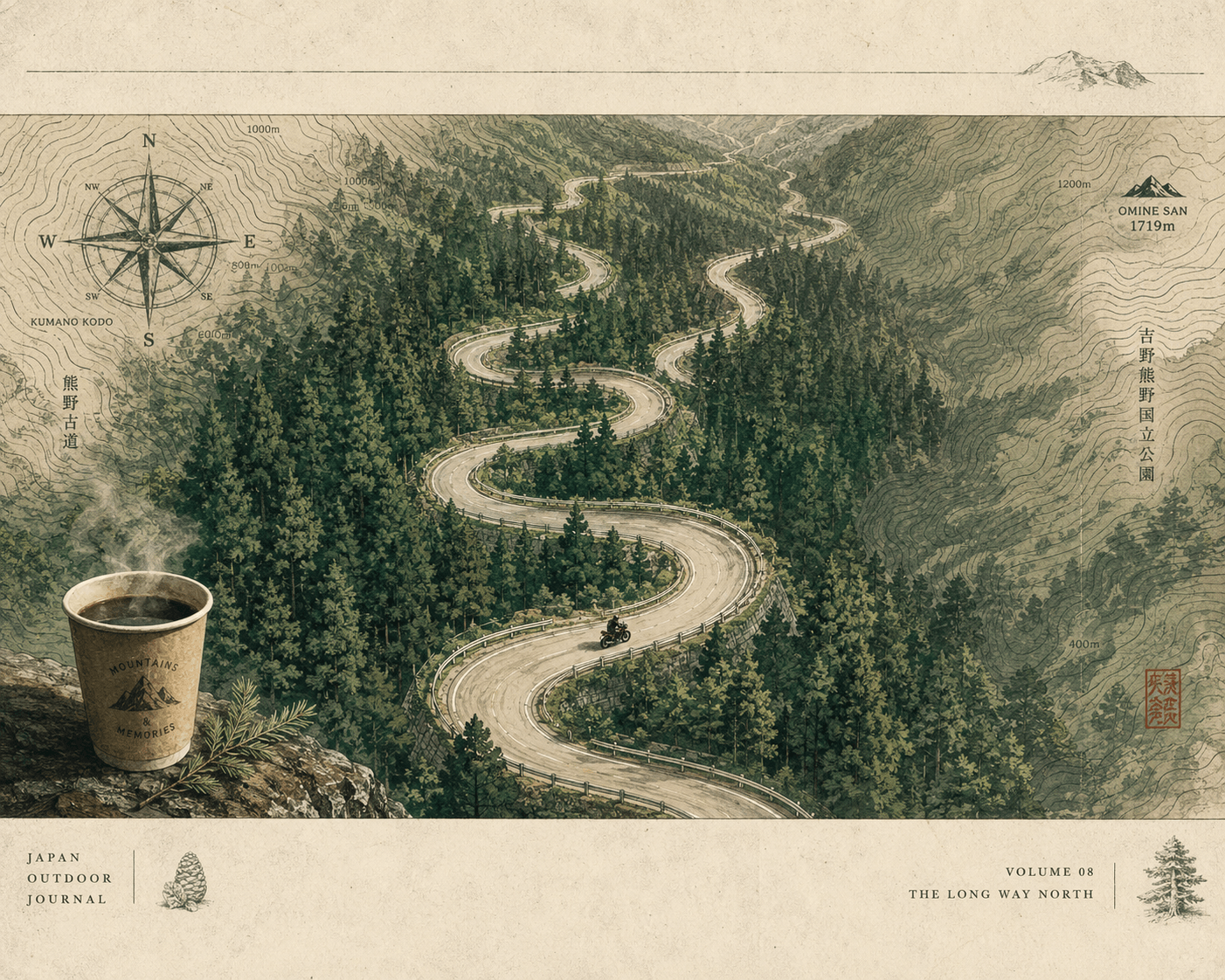
Heading to Okuchichibu's Shigasaka Pass, a road you won't find in any atlas. In this opening installment, a touring editor explains why they love "roads that exist out of necessity for the land" more than "roads optimized purely for riding."
KEY TAKEAWAYS
- Shigasaka Pass rises to roughly 1,040 metres on the Saitama–Gunma border; its tight road demands attention to surface conditions and oncoming traffic.
- On lesser-known roads, checking closures and planning fuel and rest stops in advance is central to a safe ride.
Sipping coffee at a roadside station while spreading out a map — that's my favorite moment. While I'm thinking about where to ride next, the idea for the next piece starts forming in my head. To kick off this series, "Japan Winding Roads Journal," I picked Okuchichibu's Shigasaka Pass first. A prefectural road whose name doesn't even appear in the road atlas — that's exactly the kind of road that resonates with me most. My reason for starting this series is simple: through years of riding windy roads all over Japan, I want to convey the richness of traveling by motorcycle. This isn't a series about riding technique. I want to write about the story a road carries, and about the particular way time flows when you're riding it.
Shigasaka Pass crosses the border between Saitama and Gunma prefectures, and today it's maintained as Prefectural Road Ueno-Ogano. Spread out a map, and you'll find this road sitting quietly where the mountains of Okuchichibu push northward. It's not in the tourist guides, but the people who know it, know it. The pass itself sits at about 780 meters and is short, but the route along the valley leading up to it is truly wonderful. Head north from the roadside station "Ryogami Onsen Yakushi no Yu," and the road gradually narrows. Settlements along the way are sparse, with cedar groves and small streams appearing in turn. There's a clear sense of the local air, of heading deeper into the mountains. The road surface is generally good, but caution is needed in the early morning hours during autumn and winter, when fallen leaves accumulate. Road temperatures also tend to drop, so I'd recommend reading the season of the land before you ride.
I think there are two kinds of winding roads in Japan: "roads optimized for riding" and "roads that exist as a necessity of the land." The former offer a pleasure similar to a racetrack. The latter carry a story — why this road exists here in the first place. I'm overwhelmingly drawn to the latter. The old route over Shigasaka Pass was once a lifeline for Chichibu residents traveling to and from the Gunma side. Today there's almost no traffic, and it's become a quiet road through the forest. Imagining the people who once traveled it, amid that stillness, gets me a little sentimental. Sitting at a roadside station with a coffee, thinking about that, there are moments when riding stops feeling like "transportation" and starts feeling more like "time travel." Spreading out a map is when that kind of imagination really takes off.
Once you cross the pass and come out on the Gunma side, the scenery changes again. The difference in climate and terrain from one side of a single mountain to the other — being able to feel that firsthand is, I think, one of the great pleasures of winding-road touring. From the damp cedar forests on the Saitama side to the open air of the Gunma side — it's precisely because you're on a bike that you can feel that change against your skin. Even the subtle differences in temperature or wind direction that you might miss in a car come through clearly on a motorcycle.
In "Japan Winding Roads Journal," I'll pick one road like this to write about each time. I'll eventually cover the famous, celebrated routes too, but I wanted to start with "roads you won't find in the atlas." The reason is that what I want to convey through this series isn't riding skill, but the quality of the joy of traveling by motorcycle. Spreading out a map to decide where to go, having a coffee at a roadside station, burning the local scenery into your memory — I believe it's the accumulation of experiences like these that enriches a life lived on two wheels. I'll write not just about route data, but about how a road came to be and the character of the land along it. Next time I'm thinking about a certain pass in Nagano Prefecture. My finger is already itching over the map.
The encounters along the way matter to me in this series too. A local rider who struck up a conversation at a roadside station, an old story about the road told by the owner of a teahouse at the pass, a shortcut known only to the people who live there — I consider all of that "information you won't find on a map" to be part of a winding-roads journal too. Traveling by motorcycle isn't just about the movement itself; it includes the people you meet and talk to along the way. Spreading out a map with a stranger over coffee at a roadside station — that, more often than not, is the moment that feels most like a true journey. Look forward to the next installment — I'll bring it to you along with the local sense of the season. I love the time spent spreading out a map and searching for the next destination just as much as I love riding itself. I'll keep bringing you that joy too, through Japan Winding Roads Journal. Thank you for reading. A motorcycle, a map, and a cup of coffee — sometimes that's all it takes for a journey to be complete.
Sources and references
Public information cited or consulted while preparing this original feature.