Culture Exploration Vol. 1: Reading the 2026 Custom Scene — Where Are Motorcycles Headed Now?
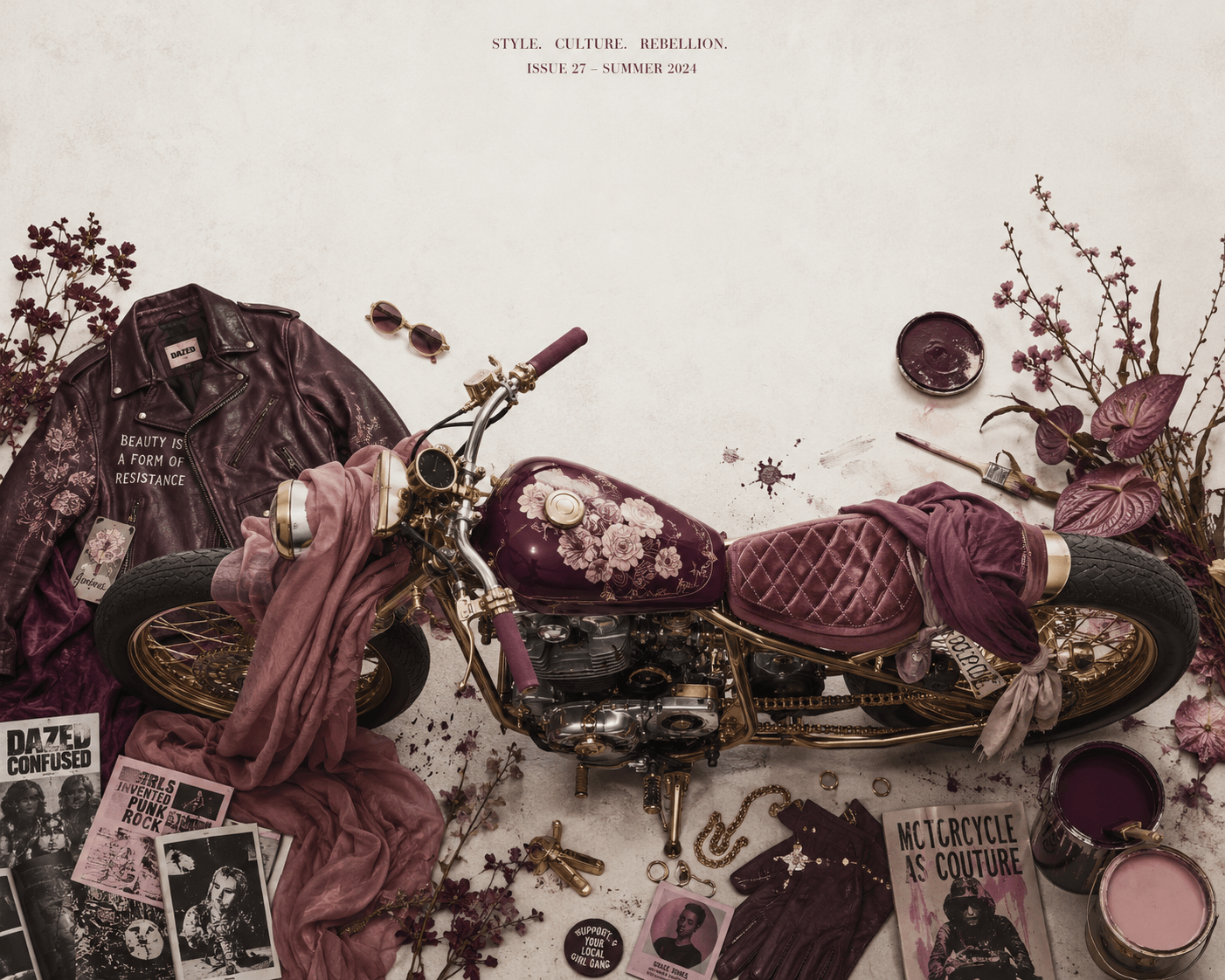
From 'gloss' to 'the trace of the hand' — where is the aesthetic of the 2026 custom scene heading? In this debut column, a culture editor with a background in fashion reads the intersection of motorcycles and beauty.
KEY TAKEAWAYS
- In 2026 custom culture, EV design freedom and hand-built restomods meet through the same focus on the maker’s aesthetic.
- Material, welds, and work-in-progress imagery now communicate custom value as a story beyond polished finished machines.
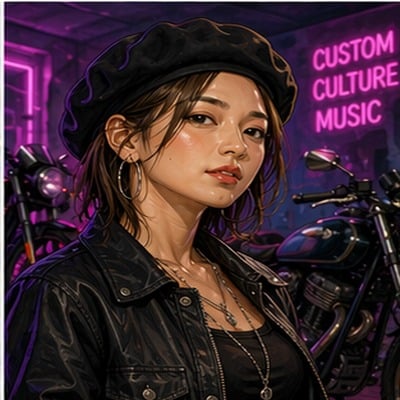
When I was in fashion, I was drawn to the visual power of motorcycle culture. There was a custom bike I happened to see at an exhibition once — that was the moment. Without a word, just sitting there, you could feel 'someone's aesthetic' with your whole body. When you look at a custom bike, the maker's aesthetic is right there, exactly as it is. It's expression that needs no words, and that's what struck me. In the world of fashion too, I'd been chasing 'design that needs no words,' so I understood right away the power that motorcycle culture holds. As I start this 'Culture Exploration' series, I want to begin by writing about where the 2026 custom scene is heading. Where is that scene's energy right now?
Looking at the current custom scene through the lens of visual power, a bigger trend comes into focus. I think the biggest change in recent years is 'how materials are presented.' Custom culture used to be dominated by chrome plating and glossy paint. Whether it was gunmetal or pearl white, there was an era when 'shine' was the value. But now, makers' aesthetics are moving in a completely different direction — roughness, texture, deliberately staged imperfection. Deliberately exposing weld seams, finishing rusted bare steel with nothing but clear coat, contrasting carbon and aluminum as different materials — that style of showcasing 'the trace of the hand' as an aesthetic has become mainstream. It feels like the source of visual power is shifting from 'the beauty of completion' to 'the honesty of the making.' I think this is the same current that ran through 'normcore' and the 'vintage revival' in fashion.
If I had to put the energy of that scene into words, it would be 'the aesthetics of subtraction.' Instagram's influence is obvious — it's true that a bike being photogenic has become one axis of value. But what's interesting is that this social media culture has reinforced not 'flashiness' but 'authenticity.' Photos of a custom builder's workshop, a workbench lined with parts, a frame mid-build — this kind of behind-the-scenes content gets high engagement because interest in the story of 'who made it' and 'how it was made' is growing. Visual power is born from that too. A custom bike isn't just the finished product. Including the background of the person who made it, it comes together as a single visual — something close to what the fashion industry calls 'brand storytelling.'
As for 2026 trends, there are a few I'm watching. One is the evolution of scrambler style. That visual, somewhere between off-road and urban, has been around for five years, but the sophistication of material choices and coloring is completely different now. It feels like the maker's aesthetic, which used to lean toward 'ruggedness,' is now heading toward 'harmony with elegance.' Another is the rise of EV customs. Because electric motorcycle bodies aren't constrained by an engine layout, there's much more freedom in form. In terms of visual power, EV customs have the potential to create shapes gasoline bikes simply can't. It's not mainstream yet, but I do think the scene's energy is turning toward EVs — and we're seeing more cases of EV customs winning awards at concours-style events.
In 'Culture Exploration,' I plan to write about the custom scene at home and abroad, the intersection of motorcycles and fashion, and the movements of influencers and brands — sensitively, but grounded in proper reporting. I'll leave the spec talk to other columns. What I want to write about is the visual and cultural power that motorcycles as vehicles carry. I want to keep writing pieces that convey the maker's aesthetic.
Watching the custom scene, there's something I always think about. A motorcycle is made as a mass-produced object, but through customization it becomes 'the only one of its kind.' In that process lies the essence of making things. The maker's aesthetic appears as something visual — that's the same structure as haute couture in fashion. That's the reason I'm drawn to custom bikes. It's a world where 'who made it' matters just as much as 'what was made.' That's where the scene's energy comes from. Through this column, I want to keep putting that visual power into words. Next issue, I plan to interview a notable domestic builder. Look forward to it.
Sources and references
Public information cited or consulted while preparing this original feature.